
1. Event Overview
On July 30, 2025, at around 07:01 UTC, a powerful earthquake with a moment magnitude of 8.8 struck approximately 119 km east‑southeast of Petropavlovsk‑Kamchatskiy, Kamchatka Peninsula, Russia. It’s the strongest earthquake in the region since 1952 (Reuters) and one of the largest ever recorded. Lucky it didn’t hit in a vulnerable heavily-populated area! Longe-range tsunami warnings across the Asia-Pacific did their job and were triggered immediately, with emergency warnings issued in Russia itself, and Japan and Hawaii.
2. Geological Details
• Depth & Epicenter
The quake occurred at a shallow depth of ~19 km (12 miles) beneath the seafloor (Reuters).
• Tectonic Context & Cause
This rupture occurred along the Kuril‑Kamchatka subduction zone, where the dense Pacific Plate subducts beneath the Okhotsk Plate at convergence rates of ~86 mm/yr. These megathrust-type earthquakes generate the largest events in this region (Wikipedia).
• Aftershocks
Several strong aftershocks followed, with magnitudes up to ~6.9, as noted by the USGS and local monitoring authorities. Although aftershock activity is ongoing, no significantly larger main shocks are expected in the near term (Reuters).
3. Damage & Regional Impact
• Russia’s Far East
- Severo‑Kurilsk and surrounding coastal settlements experienced partial flooding from tsunami waves up to ~4 m high.
- A kindergarten was damaged, and there were reports of power outages in Sakhalin region.
- Several injuries, including people hurt during evacuation or jumping from windows, but no confirmed fatalities (Reuters, Sky News).
• Japan
- Extensive evacuations, especially in Hokkaido and northeastern coastal regions, with over 900,000 people advised to move.
- Tsunami waves of up to ~60 cm (~2 ft) were recorded; no damage or casualties reported.
- Fukushima nuclear plant workers were evacuated as a precaution; no abnormalities observed (The Guardian).
• Pacific Basin (Hawaii, U.S. West Coast, Canada, etc.)
- In Hawaii, tsunami waves of approximately 1–1.2 m (3–4 ft) struck—robust evacuation alerts were issued, though no major damage reported so far. Some small flooding occurred in shoreline zones.
- Tsunami watches extended along the West Coast of the U.S., British Columbia, Alaska, Guam, Ecuador, New Zealand, and other Pacific coastal areas; wave heights up to 1–3 m were forecast in many locales (CBS News, Reuters, News.com.au, The Guardian, The Washington Post).
4. Tsunami Risk & Response
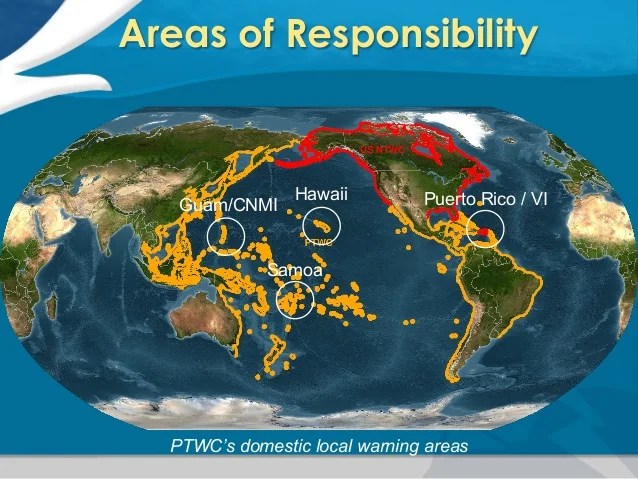
- Immediate tsunami warnings issued across the Pacific (see network map below): including Hawaii (see Hawaii box below), Japan, the U.S. West Coast, Canada, New Zealand, Ecuador, Guam, among others (People.com, The Guardian, News.com.au).
- Recorded wave heights:
- Kamchatka/Severo‑Kurilsk: up to ~4 m
- Hawaii: ~1–1.2 m recorded
- Japan: up to ~0.6 m
- Evacuation orders, port closures, and emergency shelters activated widely. NWS and local authorities stressed prolonged risk as multiple waves and strong currents continued (Reuters, The Wall Street Journal, News.com.au).

5. Implications & Broader Significance
- This quake is among the six strongest recorded globally, and the largest in Kamchatka since the 1952 Mw 9.0 Severo‑Kurilsk earthquake, which generated ~18 m tsunamis and caused widespread devastation in the Kuril Islands (Wikipedia).
- Highlights ongoing seismic and tsunami risk in subduction zones along the Pacific “Ring of Fire.”
- Underlines the critical importance of early warning systems, evacuation plans, and preparedness—especially given lessons from past events (e.g., 2011 Tōhoku, 1952 Kuril) (forms2.rms.com).
- In Japan, the event prompted reflection on resilience of nuclear infrastructure and continued community readiness.
6. Summary Table
| Aspect | Details |
|---|---|
| Date & Time | July 30, 2025; ~07:01 UTC |
| Magnitude | 8.8 |
| Depth | ~19 km (12 miles) |
| Epicenter | 119 km ESE of Petropavlovsk-Kamchatsky, Kamchatka |
| Tectonic Setting | Megathrust along Kuril‑Kamchatka Trench |
| Aftershocks | Series up to ~6.9; ongoing, no stronger quake expected |
| Damage | Flooding, damage to infrastructure, injuries in Kamchatka |
| Tsunami Impact | 4 m at origin, smaller waves further afield |
| Evacuations Issued | Russia, Japan (900,000 people), Hawaii, Pacific coasts |
| Fatalities | None confirmed |
| Significance | Largest since 1952; underscores subduction-zone hazard |

 Northstream Analytic